Phu Quoc Pearl Farms: History, How They Work & What to Expect in 2026

Pullman Phu Quoc Beach Resort
Languages

 en
en


en
- English
- 日本語
- 한국어
- Tiếng Việt
- 简体中文
- See this hotel on all.accor.com or brand website in other languages :
Phu Quoc Pearl Farms: History, How They Work & What to Expect in 2026
The waters of the Gulf of Thailand around Phu Quoc have produced some of Southeast Asia’s finest cultured pearls since the early 1990s. What started as a small artisan industry has grown into one of the island’s most distinctive visitor experiences: working pearl farms where you can watch the full arc of cultivation, from living oyster to finished gem.
Whether you’re a first-time visitor or returning to the island, a pearl farm tour is worth two to three hours of your stay. This guide covers the history behind Phu Quoc’s pearl heritage, how the farming process actually works, the best farms to visit from Bãi Trường (Long Beach), and what to look for when buying.
Why Phu Quoc Became Vietnam’s Pearl Capital?
Phu Quoc’s position in the Gulf of Thailand gives it two conditions that pearl oysters need most: consistently warm water temperatures and clean, nutrient-rich currents.
These conditions suit Pinctada maxima, the large-bodied oyster responsible for South Sea pearls, and they explain why the island became Vietnam’s centre of pearl cultivation well ahead of any other coastal region.
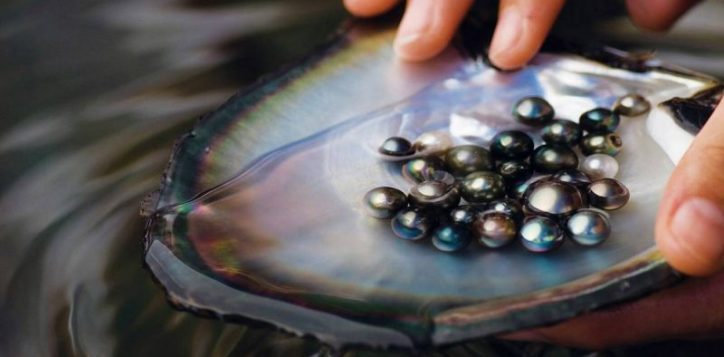
Ngoc Hien Pearl, founded in 1994, pioneered cultured pearl farming on the island by adopting Japanese nucleus-implantation techniques. Over the following three decades, the operation expanded to cover more than 1,000 hectares of sea at Rach Vem in Phu Quoc’s north, and today it is one of the only facilities in Vietnam capable of cultivating all five major pearl varieties: Akoya, South Sea (white), South Sea (gold), Tahiti (black), and Mabe.
Beyond the commercial scale, pearls carry real cultural weight in Vietnamese gift-giving and bridal traditions, which has kept domestic demand strong even as the island’s international profile has grown.
How Pearl Farming Actually Works?
Cultured pearls are not found – they are grown through a precise, multi-year process that combines marine biology and skilled craft. Here is the sequence from start to finish:
- Oyster breeding. Juvenile Pinctada maxima are raised in hatcheries until they reach the size required for surgery, typically after 18 to 24 months.
- Nucleus implantation. A trained technician inserts a round shell-bead nucleus together with a small piece of donor mantle tissue into the oyster’s gonad. This is the critical step that triggers nacre production.
- Underwater cage cultivation. The implanted oysters are placed in mesh cages suspended 3 to 8 metres below the surface and monitored over a period of six months to eight years, depending on the pearl variety being grown.
- Ongoing maintenance. Farm staff clean cages, carry out health checks, and reposition oysters regularly to control the direction and evenness of nacre layering.
- Harvest. After the growth period ends, oysters are opened and evaluated. Not every oyster produces a gem-quality pearl: rejection rates are high, and this scarcity is a central reason genuine South Sea pearls command a premium.
The thickness of the nacre layer, built up slowly over years, determines the pearl’s lustre and value. Thin-nacre pearls look bright but fade quickly. Thick-nacre pearls have the deep, almost inner-lit glow that characterises the finest examples from this region.
What Visitors See on a Pearl Farm Tour?
A standard guided tour runs 30 to 60 minutes and takes visitors across the floating farm structures above the water. The highlight for most guests is watching an oyster being opened live and the pearl extracted in front of them. After the demonstration, the tour moves to a showroom and jewellery workshop where finished pieces are on display. The floating platforms and the surrounding sea are also excellent for photography.
Best Pearl Farms to Visit Near Long Beach
Three options stand out for guests staying on Bãi Trường (Long Beach), each offering a different experience.
Ngoc Hien Pearl (Showroom on Tran Hung Dao Road) is the most accessible option for an introduction to the brand and its product range without committing to a full farm excursion. It sits directly on Phu Quoc’s main beachfront strip.
- Open daily 8 AM–7 PM.
- View on Google Maps
Ngoc Hien Treasure (Rach Vem) is the actual floating farm in the island’s north, roughly 35 to 40 minutes from Long Beach by car. This is where the full cultivation experience takes place: raft tours, live demonstrations, and a view across 1,000 hectares of working oyster cages.
- Open daily 8 AM–3 PM (arrive early).
- View on Google Maps
Quoc An Pearl offers a smaller, more intimate farm experience with a strong focus on high-quality South Sea pearls. It is approximately 25 to 30 minutes from Long Beach and is particularly popular with photographers for its compact, well-maintained setting.
- Open daily 7 AM–6 PM.
- View on Google Maps
Long Beach Pearl takes a different angle: no farm tour, but a well-curated showroom at 124 Tran Hung Dao with a broader range of finished jewellery and transparent quality grading.
- Open daily 7:30 AM–9 PM
- View on Google Maps
Third-party services are independent of Pullman Phu Quoc. We recommend confirming details directly with each provider before visiting.
How to Tell Genuine Phu Quoc Pearls from Fakes?
Genuine cultured pearls and quality imitations can look identical at a glance. These five checks take seconds and require no equipment.
- The tooth test. Rub the pearl lightly along the edge of your front teeth. Real pearls feel slightly gritty, like fine sand. Plastic and glass imitations feel completely smooth.
- Surface texture. Look closely at the surface. Genuine pearls have subtle irregularities and a deep, layered inner glow. Imitations look uniformly perfect.
- Weight. Real pearls are noticeably heavier than plastic versions of the same size. Pick up two pieces and compare.
- Drill holes. If the piece is strung, check the drill holes. Thin nacre shows as a bright white ring around a clearly visible shell-bead core. Thick-nacre pearls have a more uniform appearance at the hole.
- Price context. A genuine South Sea pearl of 10 mm or more is a premium item. Prices that seem too good to be true usually are.
Buy from reputable farms or established island brands with on-site certification. Avoid purchasing from roadside stalls with no provenance or documentation.
How to Visit a Pearl Farm from Pullman Phu Quoc?
Pullman Phu Quoc Beach Resort sits directly on Long Beach, which puts the Long Beach Pearl showroom within easy reach and the northern farms about 35 to 40 minutes away by private car or taxi.
The Pullman concierge team can arrange private transfers or point you toward reliable local operators. If you would prefer to keep the day unstructured, taxis and ride-hail apps reach the northern farms without difficulty. Confirm tour availability and current opening hours directly with each farm before setting out, as these can vary by season.
Plan the rest of your island itinerary through the resort’s destination guide, or browse current offers to find packages that make the most of your time on Long Beach.
Conclusion
Pearl farming is one of the few experiences on Phu Quoc that is genuinely hard to replicate elsewhere. The Gulf of Thailand’s waters, the decade-long cultivation timelines, and the skill of the technicians behind each gem make these farms worth a dedicated half-day.
Pullman Phu Quoc Beach Resort puts you steps from the shore and within easy reach of the island’s pearl heritage. Make the farms part of your stay, and book direct for the best rate.
Frequently Asked Questions
How long does a pearl farm tour take?
Most guided tours run 30 to 60 minutes. You will walk across floating platforms above the farm, watch an oyster being opened and a pearl extracted, and then spend time in the jewellery showroom. Allow extra time if you plan to browse and buy.
Are oysters harmed when pearls are extracted?
In well-run farming operations, the oyster is not always killed during harvest. Healthy oysters can be re-nucleated and returned to the water for a second growth cycle. That said, practices vary between facilities. It is a good question to ask your guide during the tour.
Is it worth buying pearls at a Phu Quoc pearl farm?
Buying directly from a reputable farm or an established island brand is generally good value, provided you know how to assess quality. Phu Quoc South Sea pearls are among the finest produced in Southeast Asia. Apply the tooth test, check nacre depth at drill holes, and be cautious of prices that feel too low for the claimed quality.
How far are the pearl farms from Long Beach?
Ngoc Hien Treasure in the island’s north is roughly 35 to 40 minutes from Bãi Trường by car. Quoc An Pearl is slightly closer at around 25 to 30 minutes. The Pullman Phu Quoc concierge team can arrange private transfers or recommend local operators for the journey.
What pearl types are farmed in Phu Quoc?
Phu Quoc farms cultivate up to five varieties: Akoya, South Sea white, South Sea gold, Tahiti black, and Mabe (half-pearl). South Sea pearls grown in Pinctada maxima oysters in the Gulf of Thailand are the island’s most prized, valued for their large size and thick, luminous nacre.
Can I visit a pearl farm without a tour group?
Yes. Most farms welcome independent visitors during opening hours. Entry is often complimentary, with revenue generated through the on-site jewellery showroom. English-speaking guided tours may require advance arrangement, so confirm with your chosen farm or ask the Pullman concierge team before heading out.
Access
Pullman Phu Quoc Beach Resort ☆☆☆☆☆
Group 6, Ban Quy Hamlet, Duong Bao Area, Phu Quoc Special Zone , An Giang Province
Vietnam
Tel: +84 297 267 9999 or +84 91 665 0248
Email:
ha248@accor.com