Ho Quoc Pagoda: Phu Quoc's Sacred Hilltop Temple Guide (2026)

Pullman Phu Quoc Beach Resort
Languages

 en
en


en
- English
- 日本語
- 한국어
- Tiếng Việt
- 简体中文
- See this hotel on all.accor.com or brand website in other languages :
Ho Quoc Pagoda: Phu Quoc's Sacred Hilltop Temple Guide (2026)
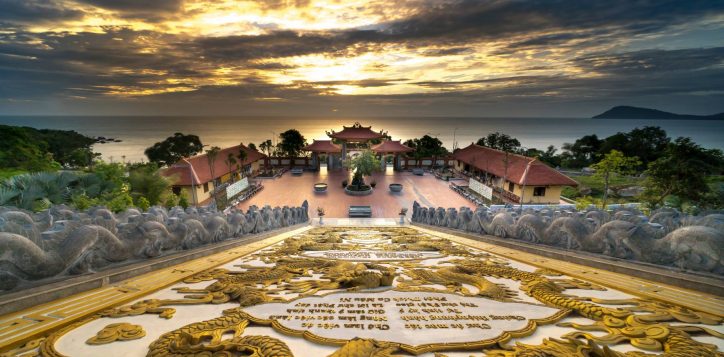
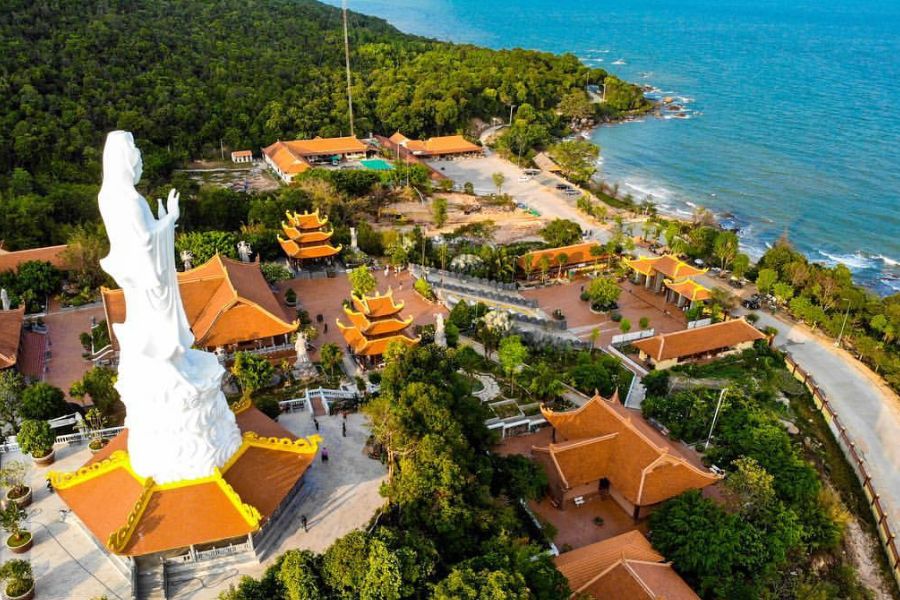
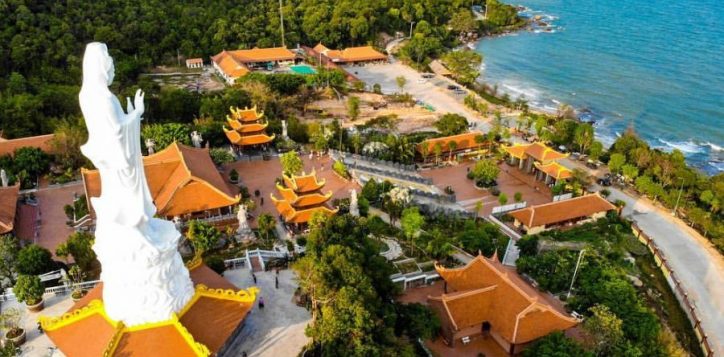
Perched on the slope of Hon Mot Mountain, with its face turned toward the open waters of the Gulf of Thailand, Hộ Quốc Pagoda (Chùa Hộ Quốc) is one of those places that resets your sense of scale. Below, the turquoise water stretches to the horizon. Above, red-tiled rooftops rise through the forest canopy. The air is thick with incense and birdsong.
This is the largest Buddhist temple on Phu Quoc Island – also known as Thiền Viện Trúc Lâm Hộ Quốc, or Truc Lam Ho Quoc Zen Monastery – and it draws visitors for reasons that go well beyond sightseeing.
Whether you come to pray, to photograph, or simply to find a moment of stillness away from the beach, this guide covers everything you need to plan your visit.
Overview of Ho Quoc Pagoda
Ho Quoc Pagoda belongs to the Truc Lam Yen Tu school of Vietnamese Zen Buddhism, one of the country’s most significant Buddhist lineages. Construction began on October 14, 2011, and after 14 months of work the pagoda was officially inaugurated on December 14, 2012. The complex continued to grow through 2013 and 2014 as additional structures were completed, and today it spans a total area of 110 hectares, making it one of the largest monastic complexes in the Mekong Delta.
- Opening hours: 6:00 AM – 6:00 PM (daily)
- Address: 426H+GVQ, Phu Quoc, An Giang, Vietnam
- Admission: Free
- Best time of day: 6:00 to 9:00 AM for the best light and fewest visitors.
- Dress code: Covered shoulders and knees are expected, consistent with Vietnamese temple etiquette. Bring slip-on shoes or sandals, as footwear is removed before entering the prayer halls.
- Etiquette: Speak quietly throughout the grounds. Photography is generally fine in outdoor areas. Ask permission before photographing inside prayer halls.
- Parking: On-site parking is available for both motorbikes and cars.
The name itself carries weight. “Hộ Quốc” translates literally as “protecting the nation.” According to the abbot, the name reflects the aspiration for the pagoda to serve as a spiritual guardian of Vietnam’s southern sea borders – a sentinel in stone and ironwood (lim) facing the open ocean.
In the Ancestral Hall at the heart of the complex, three patriarchs of the Truc Lam Yen Tu lineage are enshrined: Nhan Tong, Phap Loa, and Huyen Quang. Their presence gives the monastery its specific spiritual identity within Vietnamese Buddhism and distinguishes it from the many other pagodas scattered across Phu Quoc Island.
Architecture & Highlights of Ho Quoc Pagoda
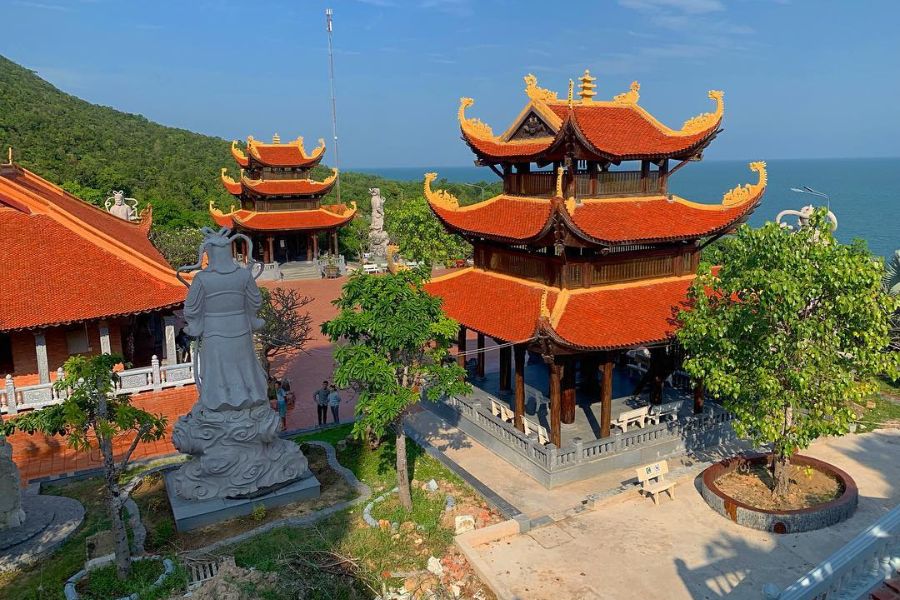
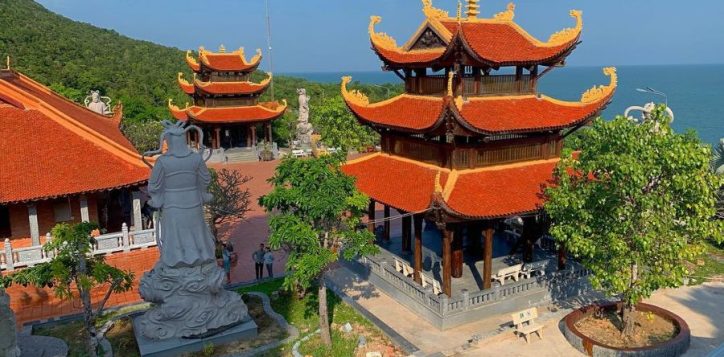
Ho Quoc Pagoda is an architectural statement as much as a place of worship. The entire complex is built from ironwood (lim), a dense Vietnamese hardwood with a lifespan of up to 1,000 years. The design draws from the Ly-Tran dynasty, one of the most prosperous eras in Vietnamese history: roof tiles shaped in the traditional dragon-scale style, wooden beams carved with intricate patterns, lotus motifs on columns and doorways, and dragon figures adorning every staircase. Nothing here feels accidental.
The compound is organised around eight distinct structures: the Tam Quan (Three-door Gate), the Tam Bao (Three Precious Halls), the Ancestral Hall, the Bell Tower, the Drum Tower, the Abbot’s House, the Monk’s House, and the Refectory. Each serves a specific role in monastic life, and each repays close attention.
| Structure | What to Notice |
|---|---|
| Tam Quan Gate | Triple-arched entrance with three named doors: Dia Giap, Bat Nhi, and Giai Thoat. Dharma Protector statues flank both sides. |
| Thien Tinh Courtyard | Stone-paved, tree-lined courtyard just inside the gate. A 3-metre marble Buddha statue stands at its centre. |
| Dragon Corridor | Tran dynasty-style carved dragon with 18 stone figures (nine per side). Marks the ascending path to the main hall. |
| Tam Bao Hall | The main worship hall at the summit, reached via 70 stone steps. Quiet interior with Buddha statues and Buddhist paintings. |
| Bell Tower | To the right of the main hall. Mirrors the paired-tower design common in northern Vietnamese temples. |
| Drum Tower | To the left of the main hall, paired with the Bell Tower. |
| Ancestral Hall | Dedicated to the Three Patriarchs of the Truc Lam Yen Tu Zen school. |
| Monks’ Residence, Abbot’s House, and Dining Hall | Active monastic quarters. The monastery functions as a working community every day. |
Two highlights stand out for first-time visitors:
- At the entrance courtyard, a large Buddha statue carved from monolithic jade greets you on arrival. The choice of jade is deliberate: Phu Quoc is often called the Emerald Island, and the stone anchors the pagoda to its island setting.
- On the staircase leading to the main hall, 18 stone-carved dragons line the steps – nine on each side – representing the Han Dynasties.
These are among the most photographed details on the island, and rightly so.
The View from the Top
Climb past the main hall and the Bell Tower opens up to one of the finest panoramas in Phu Quoc. From the upper terrace, the Gulf of Thailand spreads in every direction. On a clear morning, fishing boats are visible far out at sea. At sunrise, the light catches the red-tiled rooftops and marble steps below in a way that makes the whole complex appear to glow.
The Thien Tinh courtyard, positioned just behind the Tam Quan Gate, offers a different angle: the entire complex laid out against a backdrop of forest and ocean, with the three-metre marble Buddha statue at the centre of the stone-paved yard.
Best Times to Visit Ho Quoc Pagoda
The clearest advice: arrive early. The best window is between 5:30 AM and 8:00 AM, when the temperature is manageable, the crowds are thin, and the rising sun creates extraordinary light conditions across the temple grounds. Late afternoon – roughly 4:00 PM to closing at 6:00 PM – is the second-best window, cooled by the sea breeze and bathed in softer golden light.
Midday visits are possible but less comfortable. The heat between 11:00 AM and 3:00 PM can be intense on the open stone courtyards, and this is typically when tour groups pass through.
As for time of year, Ho Quoc Pagoda is open year-round. The dry season, running from November through April, offers clearer skies and easier driving conditions. The wet season from May through October brings fewer visitors and dramatically lush surrounding forest, though roads can be slippery on a scooter after heavy rain.
The most culturally rich time to visit is during Tet, the Vietnamese Lunar New Year. Locals from across Phu Quoc travel to Ho Quoc Pagoda to offer incense and pray for the year ahead, and the atmosphere is unlike any other time. Monthly full moon days also bring worshippers and a quiet ceremonial energy to the complex. A lantern festival is sometimes held at the pagoda during Buddhist holidays – it is worth confirming the current schedule with local contacts before your trip, as dates vary by year.
Location, Getting There, and Visitor Essentials
Ho Quoc Pagoda sits at Suoi Lon hamlet, Duong To commune, Phu Quoc City, Kien Giang province. It is positioned on the southeastern coast of the island, roughly 10 km from Phu Quoc International Airport and 18 to 20 km from the centre of Duong Dong town. The pagoda faces east toward the rising sun, with Bai Sao (Sao Beach) a short drive to the south.
The pagoda opens daily at 6:00 AM and closes at 6:00 PM. There is no entry charge.
Getting there:
- By motorbike: The most popular option for couples and small groups. From Duong Dong, follow Nguyen Van Cu Street south for approximately 18 km. The journey takes around 30 to 40 minutes and passes through forest and coastal road – the ride is part of the experience.
- By car or taxi: The right choice for families, larger groups, and wet-season visits when road surfaces can be slick. A taxi or private car from the airport takes around 15 to 20 minutes.
- By private transfer from your resort: Many resorts on Long Beach can arrange transfers. Pullman Phu Quoc’s private car service is one convenient option for guests who prefer a door-to-door arrangement.

Dress code and conduct:
Cover your shoulders and knees before entering. Light, loose clothing in natural fabrics is comfortable in the tropical heat. Remove your shoes before stepping into the main hall. Inside the complex, keep voices low and avoid interrupting active prayer or ritual – the monastery is a working spiritual community, not only a heritage site.
Photography is generally welcome in the courtyards and on the staircases, but be discreet around monks and worshippers.
How to Get to Ho Quoc Pagoda from Pullman Phu Quoc?
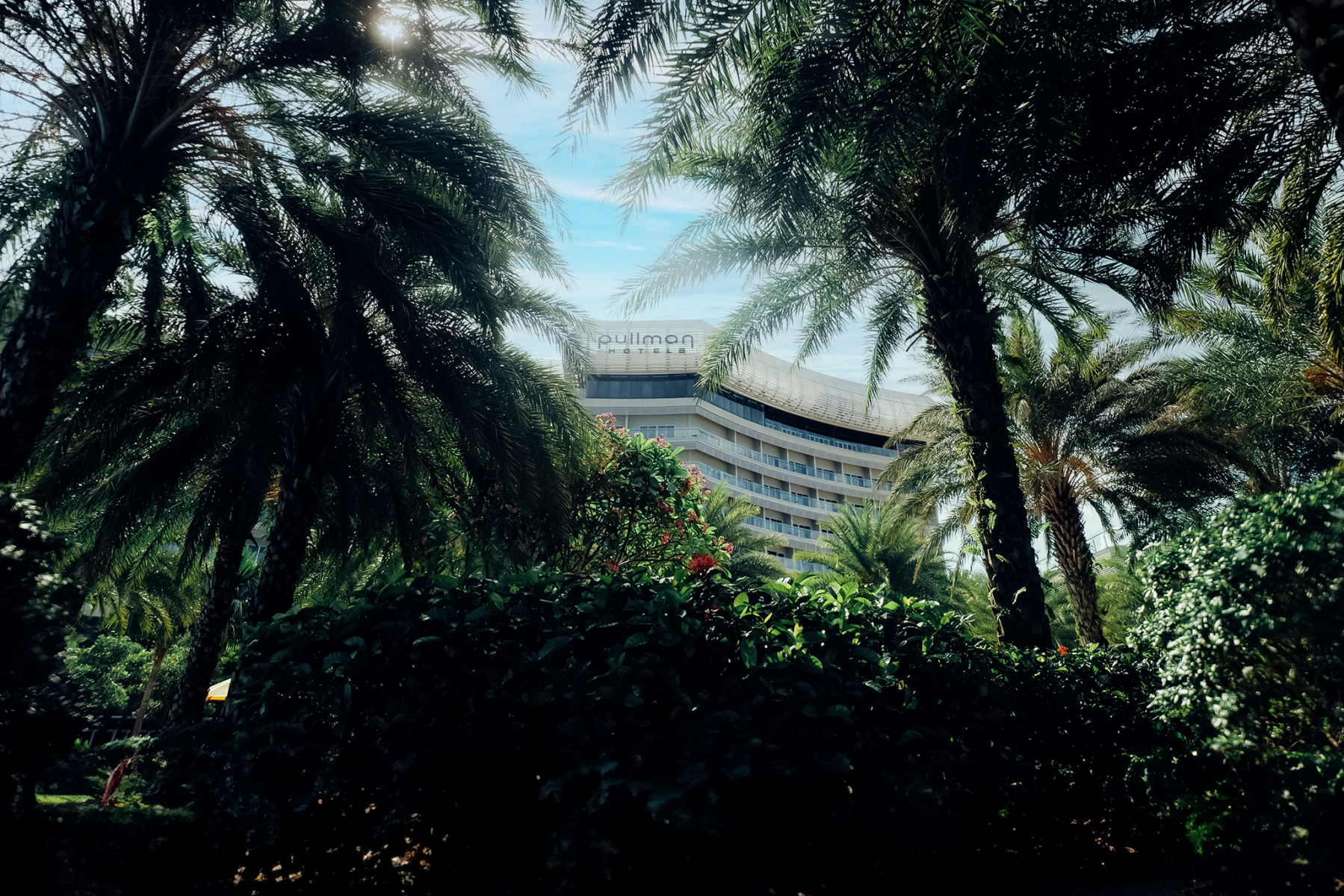
Pullman Phu Quoc Beach Resort sits on Bãi Trường (Long Beach) on the western coast of the island, placing it roughly 25 km from Ho Quoc Pagoda by the most direct route. The drive runs south through the island’s interior before meeting the eastern coast road – a journey of around 40 to 45 minutes by car.
The most practical approach is to combine the pagoda with a stop at Sao Beach (Bãi Sao), which sits a short distance south of the temple on the same stretch of coastline. Spending a morning at Ho Quoc Pagoda and following it with a few hours at Sao Beach makes for a natural full-day outing from Long Beach – spiritual stillness in the morning, the island’s most celebrated white sand in the afternoon.
Guests at Pullman Phu Quoc can use the resort’s private car service to reach both destinations comfortably. For those who prefer to self-drive, the route is well-signed from the main island highway and manageable on a motorbike during the dry season.
For a well-paced day, leave the resort by 6:30 AM. Arrive at the pagoda for sunrise, spend 60 to 90 minutes exploring the complex at its quietest, then make the short drive south to Sao Beach for the late morning and lunch. Return to Long Beach by early afternoon in time for the pool or a spa appointment.
Combining Ho Quoc Pagoda with a Half-Day in Southeast Phu Quoc
The pagoda’s location on the island’s southeastern coast puts it within easy reach of Phu Quoc’s most celebrated natural attractions. A morning departure from the resort makes it possible to visit the pagoda, a beach, and a cultural stop, and be back by early afternoon.
A practical half-day sequence:
- Depart Pullman Phu Quoc by 5:30 to 6:00 AM for a sunrise arrival at Ho Quoc Pagoda
- Spend one to two hours at the complex, covering the main hall, the dragon corridor, and the summit views. Optional: breakfast at the vegetarian restaurant
- Head south to Bãi Sao (Sao Beach), about 8 km from the pagoda, for a swim in clear, shallow water
- Optional detour: a Phu Quoc pearl farm, a 15 to 20-minute stop that gives a real sense of the island’s artisanal craft
- Return to the resort by midday, in time for lunch and the afternoon pool
This route works well by motorbike, Grab, or private car hire.
Frequently Asked Questions
What is the best time to visit Ho Quoc Pagoda?
Early morning, between 6:00 AM and 8:00 AM, is the ideal time to visit Ho Quoc Pagoda. The weather is cooler, the sunrise light enhances the sea views, and the grounds are peaceful before tour groups arrive. If you prefer the afternoon, visiting from 4:00 PM onward offers cooler temperatures and a refreshing sea breeze.
What are the opening hours and is there an admission charge?
Ho Quoc Pagoda is open daily from 6:00 AM to 6:00 PM. Admission is free of charge, and the pagoda welcomes visitors of all religions, beliefs, and backgrounds.
What should I wear to visit Ho Quoc Pagoda?
Visitors should dress modestly, with shoulders and knees covered. Lightweight, breathable clothing is recommended for Phu Quoc’s tropical climate. Shoes must be removed before entering the main prayer hall, making sandals or slip-on footwear more convenient than lace-up shoes.
How far is Ho Quoc Pagoda from central Phu Quoc and from the airport?
Ho Quoc Pagoda is located approximately 18–20 km from Duong Dong Town and about 10 km from Phu Quoc International Airport. From Long Beach on the island’s west coast, the drive typically takes 40–45 minutes by car or taxi via the island’s main roads.
Is Ho Quoc Pagoda the same as Truc Lam Zen Monastery?
Yes. Ho Quoc Pagoda (Chùa Hộ Quốc) is formally known as Thiền Viện Trúc Lâm Hộ Quốc (Truc Lam Ho Quoc Zen Monastery). It belongs to the Truc Lam Yen Tu Zen tradition, a Vietnamese Buddhist lineage established during the Tran Dynasty.
Is Ho Quoc Pagoda worth visiting during Tet?
Yes. Although Tet brings larger crowds, it is one of the most rewarding times to visit. During the Lunar New Year, local residents gather at the pagoda to pray, burn incense, and make offerings. The festive atmosphere, traditional ceremonies, and vibrant community spirit provide an authentic cultural experience that goes far beyond a typical sightseeing stop.
Access
Pullman Phu Quoc Beach Resort ☆☆☆☆☆
Group 6, Ban Quy Hamlet, Duong Bao Area, Phu Quoc Special Zone , An Giang Province
Vietnam
Tel: +84 297 267 9999 or +84 91 665 0248
Email:
ha248@accor.com