Pullman Phu Quoc Beach Resort - Luxury hotel - Bun Ken Phu Quoc: The Island Noodle Bowl and Where to Eat It

Pullman Phu Quoc Beach Resort
Languages

 en


en
- English
- 日本語
- 한국어
- Tiếng Việt
- 简体中文
- See this hotel on all.accor.com or brand website in other languages :
Bun Ken Phu Quoc: The Island Noodle Bowl and Where to Eat It
Just after sunrise in Duong Dong, the pots are already steaming. A cook ladles thick, amber broth over a tangle of rice noodles, and the smell of coconut, lemongrass, and sea fish drifts across the pavement. This is bún kèn (bun ken), and by midday most of it is gone. That timing is why so many visitors leave the island without tasting it. Bun ken Phu Quoc is part soup and part salad – a coconut-and-fish broth poured over vermicelli and a heap of raw, crunchy vegetables.
This guide from Pullman Phu Quoc Beach Resort explains what the dish is, where to eat it, and how to fit a bowl into a morning from Bai Truong (Long Beach).
An Over of Bun Ken Phu Quoc
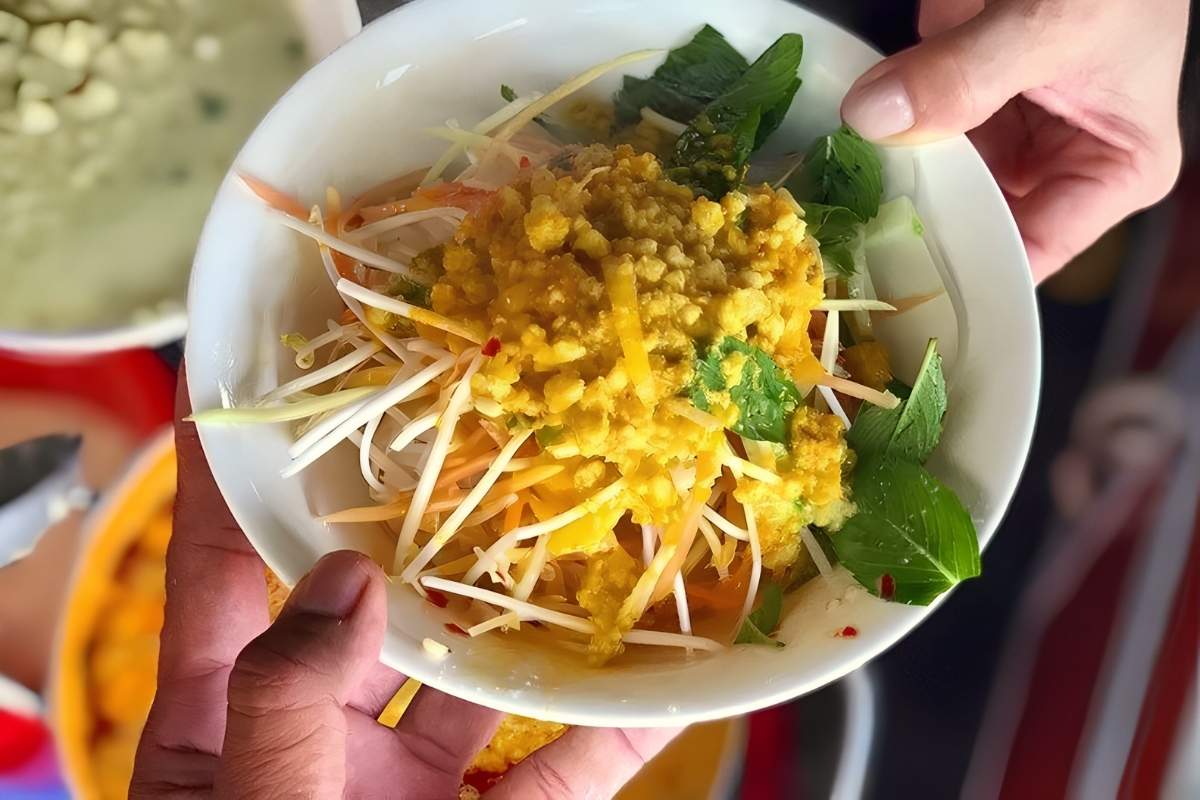
Bun ken Phu Quoc is a bowl of thin rice vermicelli topped with pounded sea fish that has been cooked down in coconut milk and served over raw vegetables. It sits somewhere between a noodle soup and a noodle salad, and it is one of the few dishes the island can call its own.
The name comes from Khmer. “Kèn”, sometimes written “khèn”, refers to dishes cooked with coconut milk, and the recipe travelled with Khmer communities across Vietnam’s far southwest. You will still find versions in Ha Tien and Chau Doc on the mainland. Cooks there use freshwater snakeheads, while in Phu Quoc, cooks use fish from the sea. That swap gives the island bowl a sweeter and cleaner flavour.
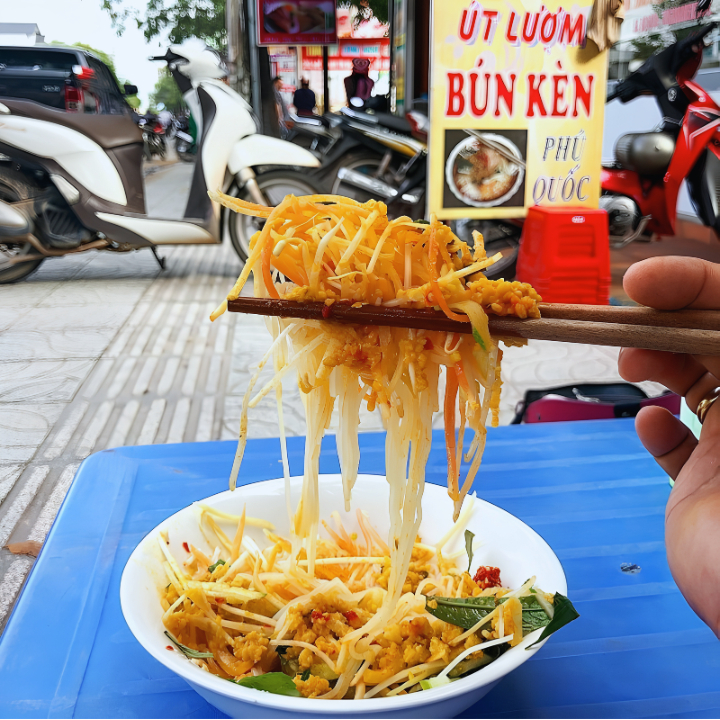
Bun ken began as a fishermen’s breakfast, and it remains a morning dish today. It is one more reason to discover more of Phu Quoc Island beyond the beach.
What Goes Into a Bowl of Bun Ken?
A bowl of bun ken combines six elements, including pounded fish, aromatics, coconut broth, vermicelli, raw vegetables, and a sharp finish. Knowing them helps, because the bowl arrives looking like a salad but eats like a soup.
| Layer | What it is | What it adds |
|---|---|---|
| Fish | Barracuda or yellowtail scad | Sweet, firm base |
| Aromatics | Lemongrass, garlic, chilli, turmeric | Fragrance and warmth |
| Broth | Coconut milk, curry powder, five-spice | Richness, amber colour |
| Noodles | Fresh rice vermicelli | Soft, neutral carrier |
| Vegetables | Green papaya, cucumber, bean sprouts, herbs | Crunch and freshness |
| Finish | Fish sauce, lime, chilli, peanuts | Sour, salty, nutty lift |
The cook boils the fish, removes the bones, pounds the flesh, and fries it with the aromatics before the coconut milk goes in. The broth then reduces until it is closer to a sauce than a soup. A spoonful of sweet-and-sour fish sauce goes on last.
The result tastes rich and slightly sweet, with crunch in every mouthful. It stays mild until you add chilli.
3 Local Addresses to Eat Bun Ken Phu Quoc
The best-known place to eat bun ken Phu Quoc is Bún Kèn Út Lượm, which has served the dish since 1980. Three other addresses are worth knowing.
| Shop | Address | Hours | Good for |
|---|---|---|---|
| Bún Kèn Út Lượm | No.42, 30 Thang 4 street, Duong Dong | 06:00 – 12:30 | The original recipe |
| Bún Kèn 87 | No.87, 30 Thang 4 street, Duong Dong | 08:00 – 17:00 | A second option nearby |
| Bún Kèn Cô Thu | 98 Tran Quoc Toan, An Thoi | 10:30 – 18:00 | Late risers |
Út Lượm is the reference point due to its family recipe and a broth built on pounded barracuda. Bún Kèn 87, on the same street, is the fallback if the first pot runs out. Cô Thu cooks with yellowtail scad and stays open through the afternoon.
If you prefer anywhere else, a stall full of locals can be a good signal. For a sit-down dinner later in the day, see more places to eat in Phu Quoc.
Note that Út Lượm is a single shop rather than a chain. However, several shops on 30 Thang 4 street trade under similar names that will confuse you. So find exactly no.42 address.
How to Eat Bun Ken Like a Local
Eating bun ken well comes down to timing and mixing. Five habits will have you eating like a regular.
- Go early. Arrive between 06:00 and 09:00 in the morning, when the broth is freshest and before the shops sell out.
- Mix from the bottom. The vegetables sit under the noodles, so turn everything over with your chopsticks before the first bite. The broth should coat every strand.
- Season in order. Squeeze in lime first, taste, then add chilli a little at a time. The broth is mild on its own, so the heat is yours to set.
- Carry cash. Bring small notes to pay at the table.
- Say “boon ken”. If the pronunciation fails, pointing at the pot works too, and a smile helps.
Planning a Bun Ken Morning From Long Beach
Dương Dong is about a 20 minutes drive from Pullman Phu Quoc Beach Resort on Long Beach, so a bowl of bun ken fits easily into a morning. A simple plan looks like this:
- Early: A bowl on 30 Thang 4 street
- After breakfast: A walk to Dinh Cậu and the market area
- Late morning: Back at the pool before the midday heat
Take the resort shuttle service or a private transfer. For the shuttle bus, you should reserve 24 hours in advance. The dry season, from November to April, is the easiest time for an early start, and our guide to Phu Quoc weather by season covers the other months.
Back at the resort, keep the sea on the menu with beachfront seafood at Sea Stars. The Sea Star BBQ & Seafood Market is a potential option for dinner.
Conclusion
Bun ken belongs to Phu Quoc in a way few dishes do, and it rewards an early alarm. Set one, reach Duong Dong by 07:00, and eat where the locals eat. You will be back on the sand before the midday heat sets in.
Pullman Phu Quoc Beach Resort puts you on Long Beach, 20 minutes from the noodle shops of 30 Thang 4 street and 12 minutes from Phu Quoc International Airport. Choose a room, plan your morning, and leave space for a second bowl. Explore our rooms, suites, and villas, and book direct for the best rate.
Frequently Asked Questions
What fish is used in bun ken Phu Quoc?
Bun ken Phu Quoc is made with barracuda (cá nhồng) or yellowtail scad (cá ngân), two sea fish with firm, sweet flesh. The fish is boiled, deboned, pounded, and fried with lemongrass and turmeric before it meets the coconut milk. Mainland versions in Ha Tien and Chau Doc use freshwater snakehead instead, which is the main difference between the island bowl and the others.
How much does a bowl of bun ken cost in Phu Quoc?
A bowl of bun ken in Phu Quoc costs around 20,000 to 40,000 VND depending on the shop. That is in line with other local noodle dishes on the island. Prices at independent shops can change without notice, so carry small notes and confirm the price when you order.
What time of day should I eat bun ken?
The best time to eat bun ken is between 06:00 and 09:00. Most shops in Duong Dong open at dawn and close around midday, or earlier if they sell out. If you prefer a slower start, Bún Kèn Cô Thu in An Thoi, in the south of the island, serves from 10:30 to 18:00.
Is bun ken spicy?
Bun ken is mild by default. The coconut broth is rich and slightly sweet, and fresh chilli is added at the table, so each person sets the heat. The bowl contains fish, fish sauce, and peanuts. If you have dietary requirements, tell the shop when you order and ask about the ingredients directly, as recipes vary from one kitchen to the next.
Access
Pullman Phu Quoc Beach Resort ☆☆☆☆☆
Group 6, Ban Quy Hamlet, Duong Bao Area, Phu Quoc Special Zone , An Giang Province
Vietnam
Tel: +84 297 267 9999 or +84 91 665 0248
Email:
ha248@accor.com

