Pullman Phu Quoc Beach Resort - Luxury hotel - Dao Ngoc Phu Quoc: Why Phu Quoc Is the Pearl Island

Pullman Phu Quoc Beach Resort
Languages

 en
en


en
- English
- 日本語
- 한국어
- Tiếng Việt
- 简体中文
- See this hotel on all.accor.com or brand website in other languages :
Dao Ngoc Phu Quoc: Why Phu Quoc Is the Pearl Island
Vietnamese travellers rarely say “Phu Quoc” without also saying “Dao Ngoc”. The nickname translates as Pearl Island, and it has followed the place for decades, long before the airport and the resort strip along the west coast.
Phu Quoc is Vietnam’s largest island, a 567 km² block of forest, pepper farms, fishing villages, and beach sitting in the Gulf of Thailand. This guide covers what the Dao Ngoc name actually means, when to visit, how to get there without a visa, and how to choose which coast to stay on.
Why Phu Quoc is called Dao Ngoc
Phu Quoc earns the Dao Ngoc name two ways, one literal and one figurative.
The literal reading points to pearls. The island has farmed pearl oysters for generations, with farms along the east coast near Ham Ninh and the south around An Thoi, where the water stays calm enough for the trays. You can still visit a working pearl farm and watch the seeding process. Pearls remain one of three things visitors carry home, alongside fish sauce and pepper.
The figurative reading is the one Vietnamese speakers use more often. “Ngoc” means gem or jewel, and the phrase works the way English uses “the diamond of”. This reading compares Phu Quoc as the gem of Vietnam’s southwestern sea.
Both readings sit together comfortably, and the nickname predates the resort era. It was never a marketing line.
An overview of Dao Ngoc Phu Quoc
Dao Ngoc Phu Quoc sits in the Gulf of Thailand off Vietnam’s southwestern coast, roughly 400 km west of Ho Chi Minh City and about 45 km from Hà Tiên. It is closer to Cambodia than to most of Vietnam.
- Location: Gulf of Thailand
- Island area: 567 km²
- Length (north – south): 49 km
- Islands in the archipelago: 22
- Main town: Duong Dong
- Province: An Giang
The island’s shape matters when you plan. The west coast holds most of the resorts and faces the sunset, the south holds the best beaches and the cable car, and the north stays quiet and forested. A closer look at the island helps before you pick a base.
When to visit Dao Ngoc Phu Quoc
The best months for Dao Ngoc Phu Quoc run from November to April, when the sea is calm and rain is rare. The wet season, May to October, is not a write-off, but it changes the shape of a day.
| Months | Sea and Weather | Suits |
|---|---|---|
| Nov to Feb | Calm sea, dry, cooler | Beach days, boat trips |
| Mar to Apr | Calm sea, dry, hot | Swimming, water sports |
| May to Jun | Warm sea, afternoon showers | Quieter stays |
| Jul to Sep | Strongest west-coast swell | Forest, spa, indoor days |
| Oct | Rain easing, sea settling | Shoulder-season travel |
If the sea is the point of your trip, avoid July to September. Swell on the Bai Truong (Long Beach) side runs highest then, and boat trips to the southern islands are the first thing cancelled. Otherwise, wet-season rain arrives as a short afternoon downpour and mornings stay clear enough to swim. Check the month-by-month weather before you fix dates.
Getting to Dao Ngoc Phu Quoc
Reaching the island is straightforward, and for foreign passport holders it comes with a rule that applies nowhere else in Vietnam.
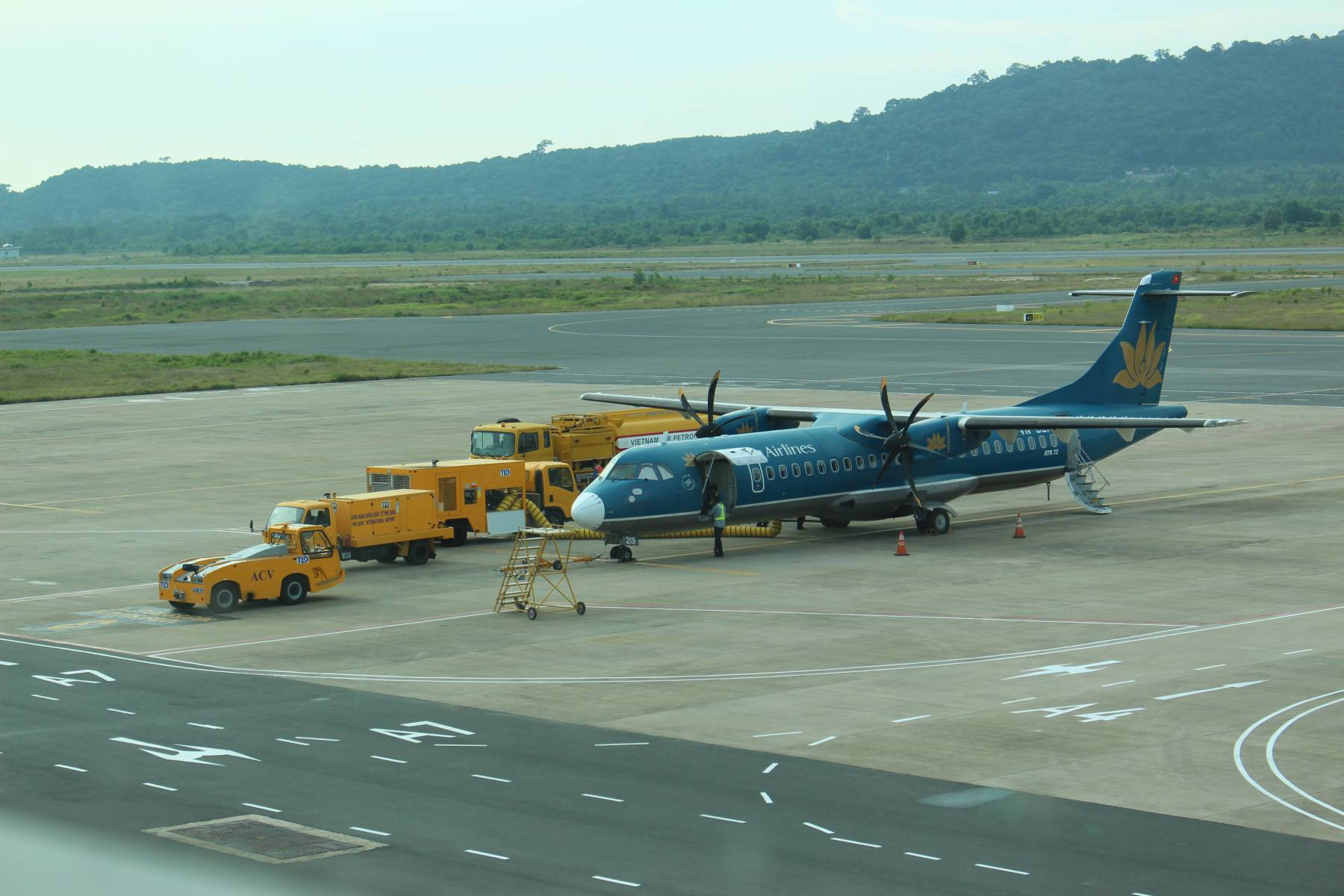
- By air: Direct domestic flights connect Phu Quoc International Airport with Ho Chi Minh City, Hanoi, and Da Nang, alongside a growing set of international routes. More on how to get to Phu Quoc.
- By sea: Fast ferries run from Rach Gia and Ha Tien. Crossing times shift with sea conditions, so check the day’s schedule.
- Visa exemption: Any foreign national arriving directly on Phu Quoc by air or sea may stay up to 30 days without a visa, according to Vietnam Airlines’ travel advice. The passport must be valid for at least six months.
- One condition: The exemption covers direct arrivals only. Land in Ho Chi Minh City or Hanoi first and connect domestically, and it does not apply.
- Getting around: Rented scooters, ride-hailing, and resort transfers all work here. The airport sits close to the Bai Truong strip, which keeps airport transfers and shuttle service short.
The visa detail above was verified in September 2026, so confirm current requirements before booking.
What the Pearl Island is known for
Phu Quoc is not a single-attraction island. What you do here splits fairly neatly across three things: the coastline, the interior, and the food.
The Beaches
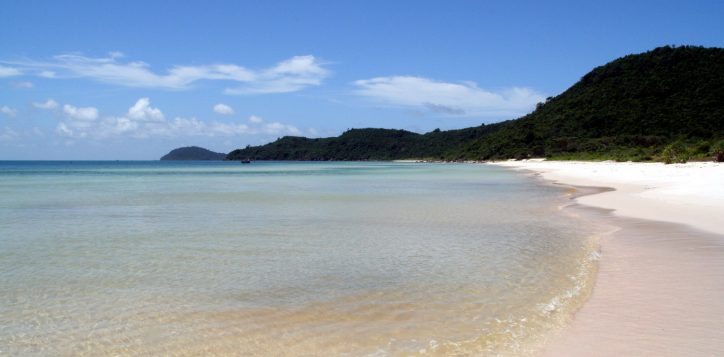
The coast you pick shapes the whole trip. Bai Truong (Long Beach) runs down the west side and faces the sunset, which is why most of the island’s resorts, beach bars, and restaurants sit along it. It is walkable, well served, and close to the airport.
The south holds the finest sand. Bai Khem and Bai Sao both have the pale, powdery sand and clear shallows the island gets photographed for, though reaching either means a drive from Duong Dong. Meanwhile, the north is greener, quieter, and thin on dining.
Compare the island’s beaches before you book.
Forest, Farms, and the Cable Car
More than half the island’s land is protected forest, the part beach photography leaves out.
- Phu Quoc National Park covers the northern interior with primary forest, hiking routes, and streams that run hardest from June to September.
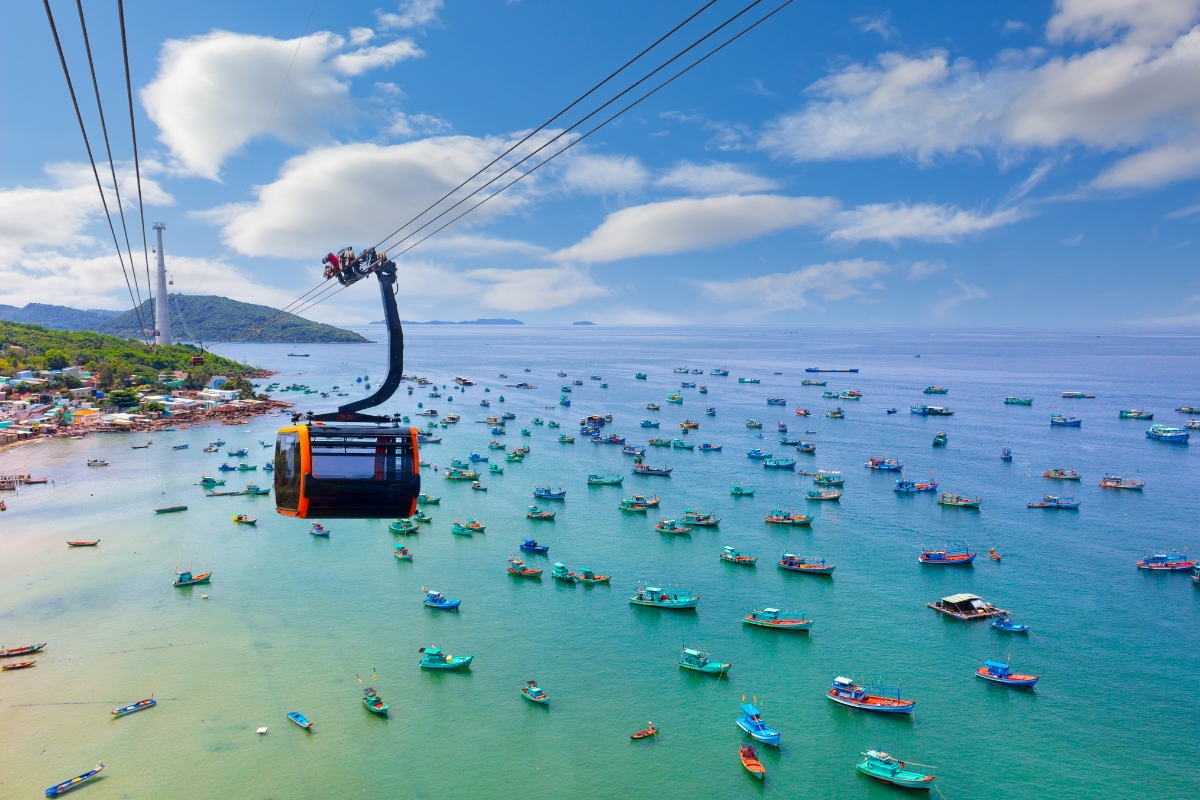
- The Hon Thom cable car crosses 7,899.9 m of open sea from An Thoi and holds the Guinness World Record for the longest three-wire sea-crossing cable car, according to Sun World.
- Pepper farms around Khu Tuong grow the peppercorns the island exports.
- Fish sauce houses, known locally as nha thung, age anchovies in wooden vats around Duong Dong.
What to Eat
The island has its own dishes, not a generic Vietnamese seafood menu.
- Ghe Ham Ninh, blue crab steamed and eaten with salt, pepper, and lime at the village where it lands.
- Goi ca trich, raw herring salad rolled into rice paper with coconut, herbs, and chilli.
- Bun quay, a noodle soup found almost nowhere else, assembled at the table from raw ingredients and hot broth.
- Nhum nuong mo hanh, sea urchin grilled with scallion oil.
- Fish sauce and sim wine, the two local products most visitors take home.
For the coastal version, seafood on the beach is the shortest route.
How long it takes to explore Dao Ngoc Phu Quoc
Three days covers the essentials of Dao Ngoc Phu Quoc, otherwise five lets you slow down. With three, you get beach time, one southern excursion, and an evening in Duong Dong. Meanwhile, in five days, you can add the national park, the pepper and pearl farms, and a full day that involves nothing but water.
Stay Longer, Save More
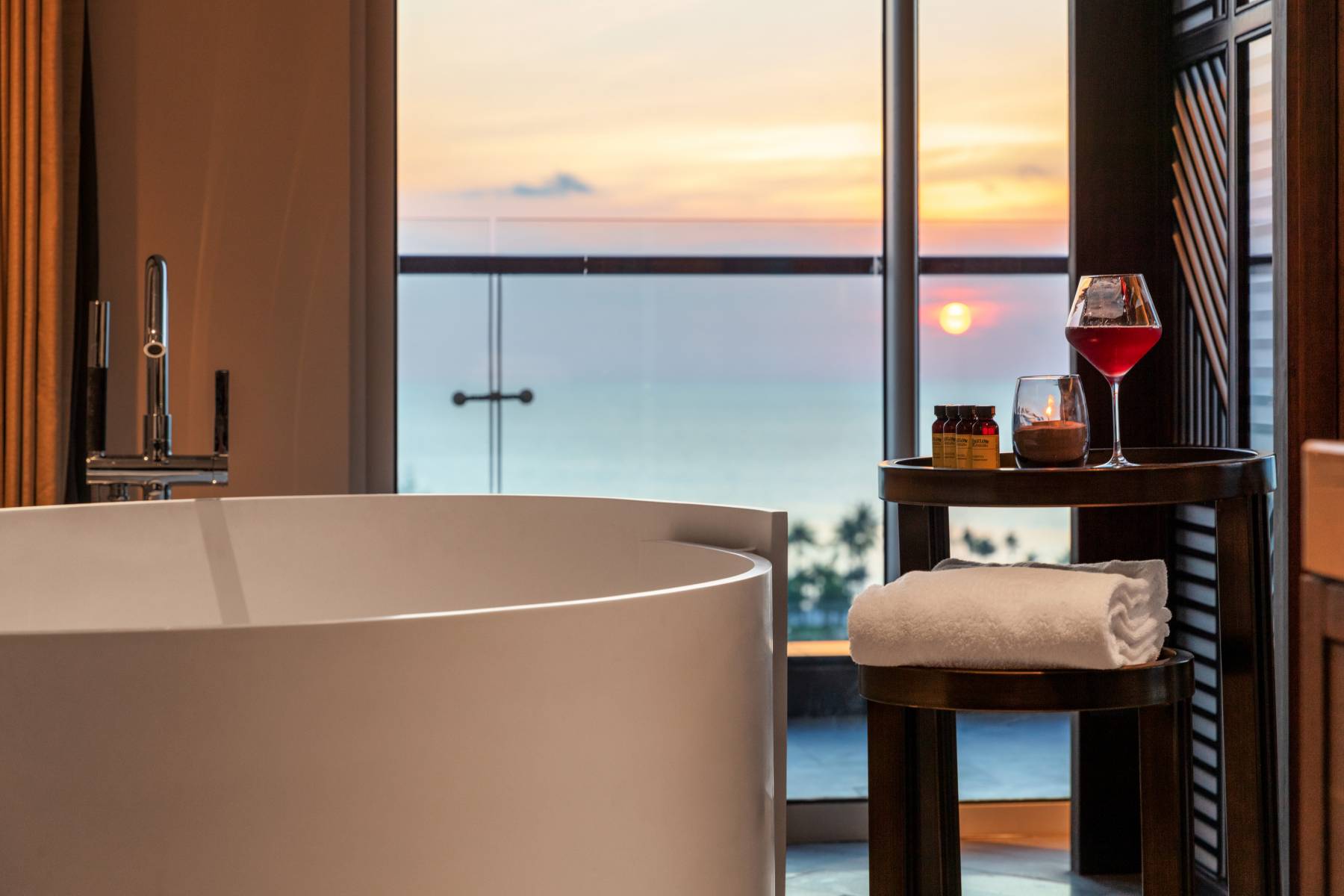
Get up to 20% off the tropical vacation of your dreams when booking 3 nights or more.
Where you base yourself matters more than most people expect. Stay on the west coast if you want sunsets, walkable dining, and an airport transfer measured in minutes rather than an hour. Choose south if the beach itself is the whole point and you accept a drive for everything else.
Bai Truong is the default for shorter stays, and it is where Pullman Phu Quoc Beach Resort sits. Its rooms, suites, and beachfront villas cover everything from a two-night stay for two to a family week.
Conclusion
The Dao Ngoc name holds up, though not because of the pearls. Phu Quoc works because it still does several things at once: a working island economy of pepper, fish sauce, and fishing boats, more than half its land under forest, and a west coast built for evenings that finish on the sand. Few islands in Southeast Asia hold that combination now.
Plan your stay on Bai Truong and book direct for the best rate.
FAQs
Do I need a visa to visit Phu Quoc?
Not if you arrive directly. Foreign nationals of any nationality flying or sailing straight to Phu Quoc can stay up to 30 days without a visa, provided the passport is valid for at least six months. It does not cover travellers who enter mainland Vietnam first and connect domestically. Confirm current rules before booking.
How many days do you need on Phu Quoc?
Three days is enough for the beach, one southern excursion, and an evening in Duong Dong. Five days lets you add Phu Quoc National Park, the pepper and pearl farms, and a day with no plan beyond the water. Anything under three nights spends too much of the trip on transfers.
Is the prison on Phu Quoc the same as the one on Con Dao?
No. They are separate sites on separate islands. Phu Quoc has its own former prison, known locally as Nhà Lao Cây Dừa or the Coconut Tree Prison, in the south near An Thới. Côn Đảo, in the East Sea, has a different prison complex. The two get confused because both are war-era detention sites.
Access
Pullman Phu Quoc Beach Resort ☆☆☆☆☆
Group 6, Ban Quy Hamlet, Duong Bao Area, Phu Quoc Special Zone , An Giang Province
Vietnam
Tel: +84 297 267 9999 or +84 91 665 0248
Email:
ha248@accor.com