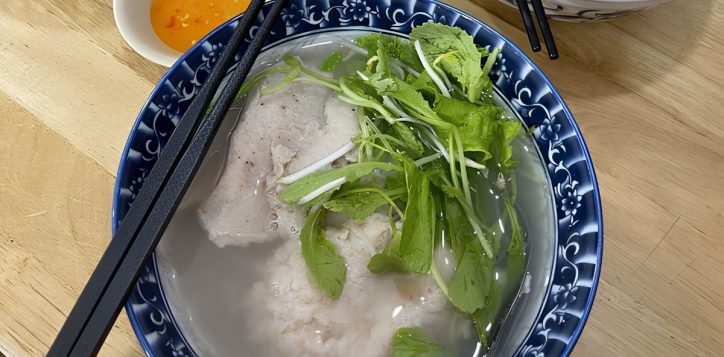
Pullman Phu Quoc Beach Resort - Luxury hotel - Bun Quay Phu Quoc: How To Eat The Island's Signature Bowl

Pullman Phu Quoc Beach Resort
Languages

 en
en


en
- English
- 日本語
- 한국어
- Tiếng Việt
- 简体中文
- See this hotel on all.accor.com or brand website in other languages :
Bun Quay Phu Quoc: How To Eat The Island's Signature Bowl
Most first-timers taste the broth, find almost nothing in it, and quietly decide the island’s most famous dish is overrated. Shop owners on Phu Quoc have come to expect that reaction. The bowl arrives unfinished on purpose, and the seasoning is handed over to you at a counter by the door.
This guide covers what bun quay is, what sets it apart from other Vietnamese noodle soups, how to eat, when to turn up, and how to reach the shops from Bai Truong (Long Beach).
An overview of bun quay Phu Quoc
Bun quay is a rice noodle soup found almost nowhere outside Phu Quoc, built on fresh seafood paste, noodles pressed to order, and a broth the diner seasons at the table. The name translates roughly as stirred noodles, and the stirring belongs to the person eating, not the person cooking.
According to the Vietnam National Administration of Tourism, the dish descends from the shrimp noodle soup of Binh Đinh province on the central coast. Migrant workers carried it south, then rebuilt it around whatever came off the boats at Phu Quoc, which is why squid and mackerel now do the work that pork once did on the mainland. It has since become one of the dishes people travel for, alongside the pepper and fish sauce that made the island’s name.
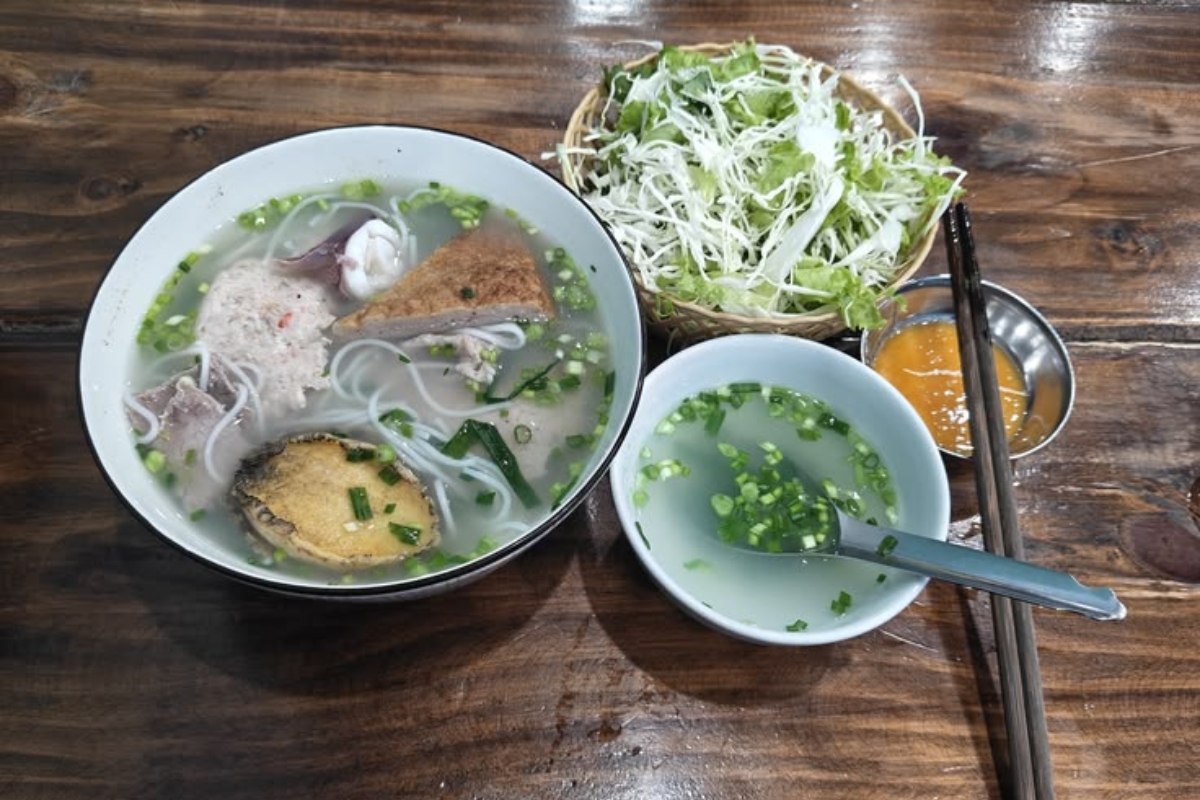
A standard bowl holds:
- Rice noodles, pressed from fresh dough into boiling water minutes before serving
- Shrimp paste and fish paste, spread around the inside of the bowl
- Fresh squid, and beef or extra seafood if you order the loaded version
- Finely chopped spring onion
- A pale, thin broth with very little salt in it
What makes bun quay different from other Vietnamese noodle soups
Three things separate bun quay from the phở and bún bò bowls travellers already know, and all three happen in front of you.
- The noodles are made at the counter: Rice dough goes into a press and drops straight into boiling water a few metres from your table. Nothing is bought in, which is why the dish does not travel well as takeaway.
- The seafood cooks in the bowl: Raw shrimp and fish paste is smeared around the inside of the bowl, then hot broth is poured over it. What arrives was cooked by the pour, not in a separate pot.
- You season it yourself: Every shop keeps a station stocked with salt, sugar, MSG, ground chilli, kumquat, and Phu Quoc pepper. Mix your own cup, stir a spoonful through the broth, and dip the noodles in the rest. Skip that step and you get hot water with noodles in it.
How to eat bun quay Phu Quoc
Eating bun quay is a hands-on ritual, beginning at the self-service sauce station.
- Taste the broth before seasoning it: Taking a sip of the plain broth first will help you notice exactly what the dipping sauce adds.
- Gather the seasonings: At the sauce station, you will find salt, sugar, MSG, ground chilli, kumquat (calamansi), and fragrant Phu Quoc pepper.
- Start with the local ratio: Add roughly one part salt to three parts sugar, followed by a small pinch of MSG and as much chilli as you like. This gives the sauce its sweet, salty, spicy foundation.
- Squeeze in the kumquat: Remove the seeds first, then squeeze in enough juice to submerge the dry seasonings.
- Stir until the sauce turns opaque: Mix vigorously until it thickens and becomes a milky orange. Opacity is the key sign that the sauce is ready. If it still looks thin and watery, keep stirring.
Today, most shops prepare a well-made sauce that comes together with the noodles. So instead of mixing it yourself, simply stirring one small spoonful of sauce into the broth is all you might do. Keep the rest for dipping noodles, fish cakes, shrimp, and squid and avoid pouring in the entire cup at once.
Tips for a smooth experience with bun quay
Bun quay is a breakfast dish above all else, and the shops fill with locals before the working day starts. Most keep trading through the evening, but the early sitting is the one worth planning around.
- Go early or mid-morning: In peak season the queue gets crowded around 08:00, and the counter is where the bottleneck forms.
- Sit outside if you can: The kitchens are open to the room, so indoor tables run warm.
- Order and collect: Most shops are self-service. Prepare to pay at the counter, take a number, and bring the bowl to your table yourself.
- Speak up before the broth is poured: Allergies, MSG, or no spring onion all have to be flagged at the point of ordering.
- Order sugarcane juice: It is the standard pairing, and it takes the edge off the chilli in the sauce.
- Eat it there: The fresh noodles soften within minutes, so takeaway is a waste of a good bowl.
If you would rather stay closer to the water, the island’s restaurant scene covers the same seafood at a slower pace.
Where to find bun quay in Phu Quoc
Nearly every established bun quay shop sits in Duong Dong ward, on or around Bach Dang, Tran Phu, Tran Hung Đao, and 30/4 streets.
The long-running names are Kien Xay, Thanh Hung, and Binh Dung, several of which run more than one branch inside the ward. There is no bun quay cluster along the resort strip, so this is a trip into town rather than a walk down the beach.
Pullman Phu Quoc Beach Resort sits on Bai Truong (Long Beach), about 25 minutes by road from Duong Dong and 15 minutes from Phu Quoc International Airport in the other direction. Getting into town from the beachfront takes one of four forms:
- Taxi or ride-hailing from the resort entrance
- A rented motorbike or bicycle, both available at the resort
- The resort’s private pick-up and drop-off service, worth arranging the night before for an early start
Phu Quoc has been a special zone under An Giang Province since 1 July 2025, following the merger of Kien Giang and An Giang. Older listings still carry Kien Giang addresses. The streets have not moved, but the province name has. So be noted if it makes you confused.
Build a morning around it
One bowl makes a good half-day if you point the rest of the morning in the same direction. Start early in Duong Dong, ahead of the queue and the heat, and give yourself time at the seasoning counter rather than rushing it.
From there, drive out to a pepper farm. The white pepper you shook into your cup an hour earlier grows on the same island, and seeing the vines makes the connection land. Be back on Bai Truong by late morning for the beach, or skip the drive on days you want a slower start and take breakfast at Salt ‘N’ Pepper instead.
Conclusion
Bun quay rewards the diners who do the work. The bowl that comes out of the kitchen is only half a dish, and it becomes the island’s best breakfast at the seasoning counter, in your own hands, adjusted to your own taste. Give it one honest attempt before deciding what you think of it.
Base yourself on Long Beach, 20 minutes from the shops and steps from the water. Explore rooms and suites at Pullman Phu Quoc Beach Resort and book direct for the best rate.
FAQs
Why does my bun quay broth taste like nothing?
Because it is meant to. The broth is deliberately under-seasoned, and the flavour comes from the sauce you mix yourself at the shop’s condiment station using salt, sugar, chilli, kumquat, and Phu Quoc pepper. Stir a spoonful through the broth and dip the noodles in the rest. Most disappointed first-timers simply skipped that step.
What time do bun quay shops open?
Bun quay is primarily a breakfast dish, and shops in Duong Dong open early in the morning to catch the local crowd before work. Most keep serving through the day and into the late evening. The busiest stretch runs through mid-morning in peak season, so arrive early if you would rather not queue.
Can children eat bun quay?
Yes. Before the sauce goes in, the bowl is mild: light broth, soft noodles, and seafood paste with no chilli. Because the seasoning is added at the table, you control exactly how salty and spicy each bowl gets. Mix a separate cup without chilli for younger diners, and tell the counter if spring onion is a problem.
Access
Pullman Phu Quoc Beach Resort ☆☆☆☆☆
Group 6, Ban Quy Hamlet, Duong Bao Area, Phu Quoc Special Zone , An Giang Province
Vietnam
Tel: +84 297 267 9999 or +84 91 665 0248
Email:
ha248@accor.com